
Peripheral artery disease (PAD)
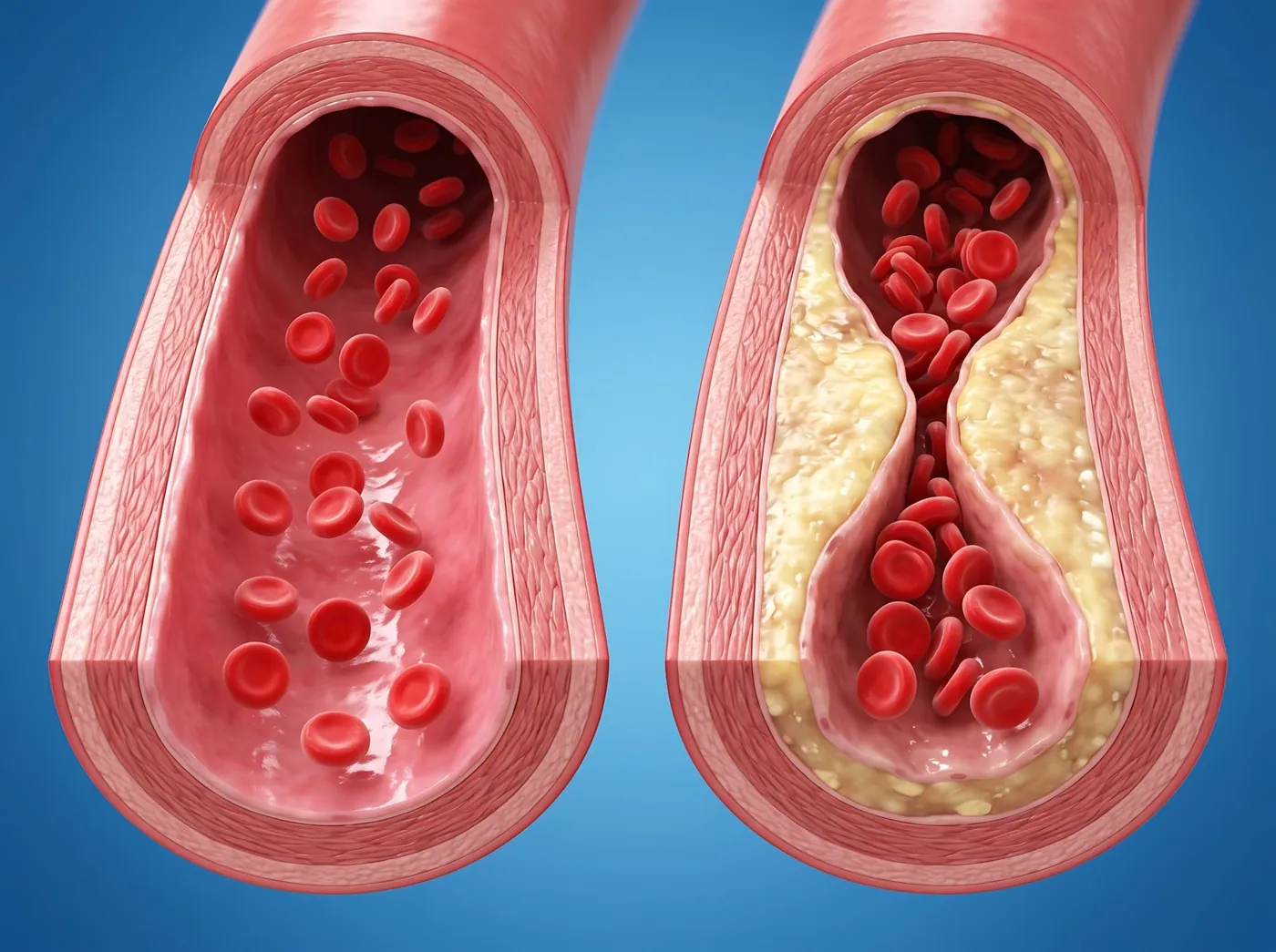
Plaque narrows leg arteries and reduces blood flow, causing leg pain with walking and wounds that heal slowly. PAD can also signal higher heart attack and stroke risk.
Leg pain when you walk, swelling, varicose veins or a possible blood clot? Our team finds the cause with simple tests and treats many problems with minimally invasive, outpatient procedures.
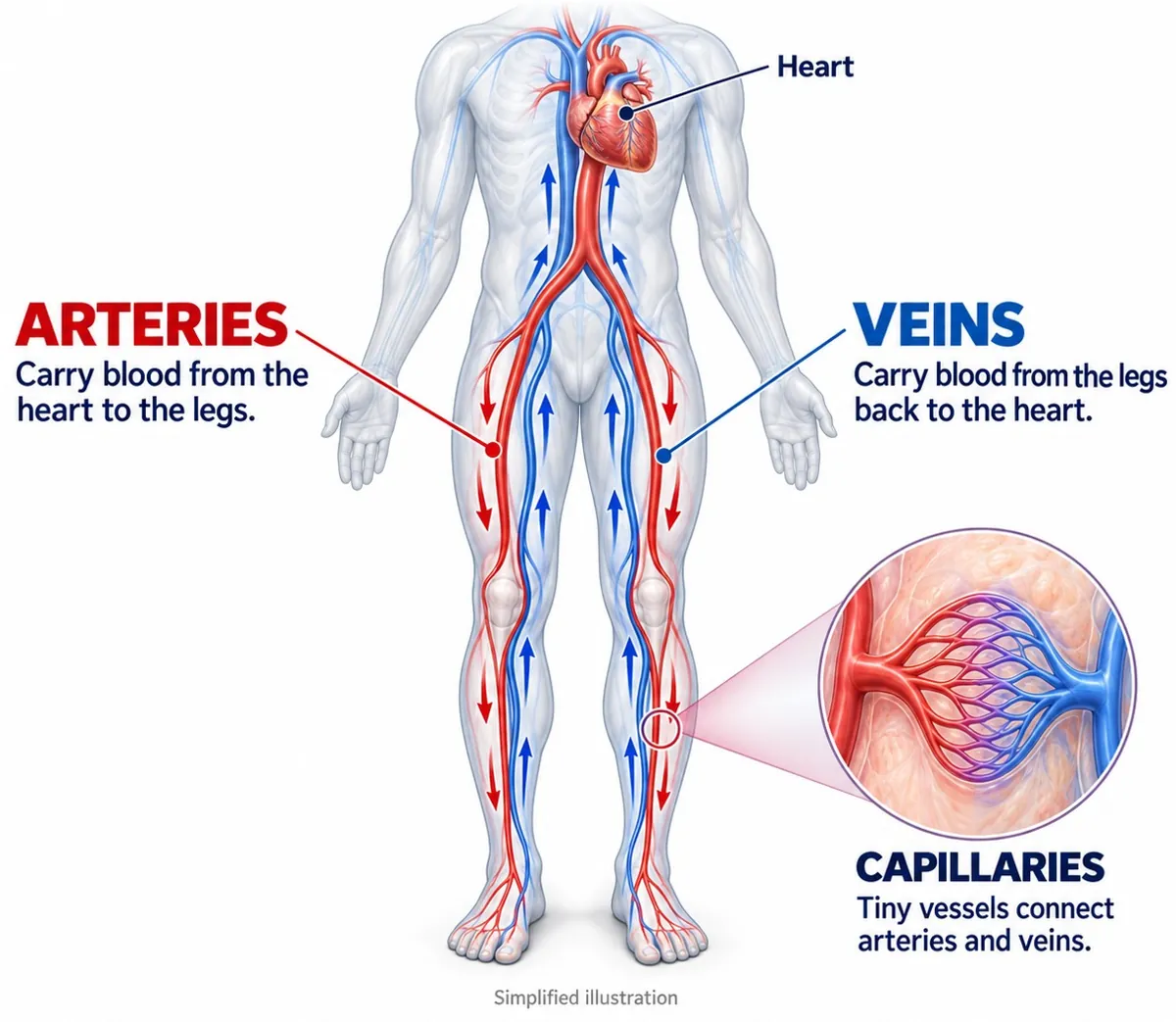
Healthy blood flow keeps your legs strong, your skin healthy and your wounds healing. Arteries carry oxygen-rich blood to your legs, and veins carry it back to the heart. Narrowed arteries can starve muscles and skin of oxygen, and weak or blocked veins let blood pool in the legs.
Advanced Joint Pain & Vascular Center provides vascular care with testing and treatment through Heart Vascular & Leg Center. Your first visit is about finding the cause of your symptoms. Most circulation tests are painless, and many treatments are done through a small puncture or in the office, with a short recovery.
If any of these keep you from the things you enjoy, a visit can help find the cause and the options that fit you.
Plaque narrows leg arteries and reduces blood flow, causing leg pain with walking and wounds that heal slowly. PAD can also signal higher heart attack and stroke risk.
Bulging, aching or visible veins in the legs, often from leaking vein valves.
Weak valves let blood leak back and pool, causing swelling, aching, heaviness and skin changes.
Heavy, swollen legs and darkened or thickened skin, checked with vein testing.
A clot in a deep vein, usually in the leg. If a clot is suspected, an ultrasound can often be done the same day.
A large vein in the pelvis can be squeezed or scarred, often after a past clot, causing swelling and heaviness. A venogram and deep vein stent can reopen it.
Narrowing of the neck arteries that supply the brain, which raises stroke risk. We check them with ultrasound.
Fistulas and grafts can narrow over time. A fistulagram finds the problem, and angioplasty or a stent can restore flow.
Every plan starts with an evaluation. Your provider reviews your history, imaging and the treatments you have tried, then explains which options may fit.
Painless tests such as the ankle-brachial index (ABI) and arterial or venous ultrasound show how blood is flowing. Many plans start with a walking program, quitting smoking, compression stockings and medicines.
Who it may help: Anyone with leg pain, swelling, visible veins or wounds.
An angiogram uses dye and X-ray to find narrowed arteries. A small balloon can open the narrowing, and a mesh tube (stent) may keep it open. All of this is done through a small puncture, usually in the groin or wrist.
Who it may help: People with PAD symptoms that limit daily life, or poor blood flow threatening the leg.
A catheter with a tiny cutting, sanding or laser tip removes plaque from inside the artery. It is often combined with angioplasty, especially for hard, calcified plaque.
Who it may help: Selected people with narrowed or blocked leg arteries.
The leaking vein is closed from the inside with ultrasound guidance, and blood reroutes through healthy veins. Options include radiofrequency ablation (RFA, heat), VenaSeal (medical adhesive), Varithena (prescription foam) and mechanochemical ablation (MOCA).
Who it may help: People with symptoms from leaking veins confirmed on ultrasound.
Ultrasound-guided foam sclerotherapy closes veins below the skin with an injected medicine. Ambulatory phlebectomy removes bulging veins through tiny nicks, usually without stitches. These are often done along with vein closure.
Who it may help: People with symptomatic surface veins, often after treating the leaking vein.
Our team checks your insurance before your visit.
We ask where your legs hurt, swell or ache, check the pulses in your legs and feet, and look at your skin and veins.
Tests like ABI and ultrasound find the cause of your symptoms. If a clot is suspected, ultrasound can often be done the same day.
You and your specialist make a plan together. Most plans combine healthy habits with treatment. We verify your benefits, including any compression stocking requirements, before a procedure.
After a vein procedure, you may have a follow-up ultrasound within about a week. After an artery procedure, we check your recovery and plan long-term care.

Dr. Kumar is a board-certified cardiologist and vascular specialist who leads the Heart Vascular & Leg Center and Advanced Joint Pain & Vascular Center team. He treats arterial and venous disease, nonhealing wounds and joint pain with minimally invasive, image-guided techniques, and trained in joint embolization in Tokyo with Dr. Yuji Okuno.
Peripheral artery disease happens when fatty plaque builds up inside the arteries of the legs, narrowing them and reducing blood flow. Many people have no symptoms at first. A quick, painless ABI test helps check your circulation.
Not always. Varicose veins can cause aching, swelling and skin changes. Spider veins are often a cosmetic concern, but sometimes they are a sign of a leaking vein underneath, so an ultrasound can help.
Many insurance plans require you to wear compression stockings for several weeks before they cover a vein procedure. Our team will tell you what your plan requires.
A sudden swollen, painful or warm leg can be a sign of a blood clot. We offer same-day ultrasound evaluation for most major plans. If you have chest pain or shortness of breath, call 911 instead.
Artery procedures can cause bleeding or bruising at the puncture site, a reaction to contrast dye or, over time, the artery narrowing again. Vein procedures commonly cause bruising and tightness. Your specialist will talk with you about the risks before you decide.
We accept Medicare and many other plans. Coverage depends on the procedure and your plan, and we explain expected costs before your procedure is scheduled.
Enter your ZIP code or city to see our offices sorted by distance. Procedures are done at our main center; our other offices see patients for consultations and follow-up visits.
Find the center that matches your symptoms. Each one is part of Advanced Joint Pain & Vascular Center, a division of Heart Vascular & Leg Center.